Description :
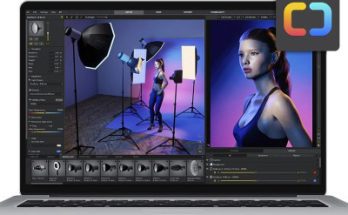
Lightroom organizes photos into “collections”—virtual collections of files that can be quickly searched. It stores keywords, previews, and metadata not in each image file, but in a centralized database (SQLite engine). Therefore, the database can be accessed even for photos currently archived on DVD. The program is significantly smaller in size than Bridge, launches faster, and uses less RAM. Overall, Lightroom is designed specifically for photographers interested in photo processing and cataloging, rather than integrating everything. Another feature of Photoshop Lightroom is the division of the photo workflow into distinct stages. Each stage has its own functional module with a corresponding set of tools and adjustment palettes.
Lightroom’s functionality includes not only a RAW converter and image processing tools, but also a powerful photo cataloging system, as well as tools for creating slideshows and web pages. Like many modern RAW converters, Lightroom utilizes non-destructive editing. This means that information about all user operations and adjustments is recorded in a service file, while the original image remains unchanged. This approach not only minimizes the risk of permanently losing the original images being processed, but also allows for the creation and printing of multiple versions of the same image without the need to save a corresponding number of full-size graphic files, which quickly eat up hard drive space. After finishing work on a photo, the user can save the processed version as a separate graphic file.
The program has five modules:
Uploading, cataloging, and searching photos (Library)
Correcting color and tonal parameters of images (Develop)
Creating a Slideshow
Print
Creating web pages to publish image collections on the Internet (Web)
Key features of Adobe Photoshop Lightroom:
An intuitive environment with tools designed specifically for photographers.
Organize, rate, and copyright images.
Creating image presets.
Integration with Photoshop.
Adjust settings for multiple images with one click.
Cross-platform – support for 64-bit architecture, Mac OS and Windows platforms.
DSLR Video File Support – Compatible with most digital SLR cameras, allowing you to easily manage and organize your still photos and videos.
Adding watermarks – embedding a logo (text or graphic watermark) into an image, adjusting the size, position and opacity.
Quick image import – the import interface is easy to navigate and includes clear visual indicators of where and how photos will be arranged after import.
Perspective correction is a non-destructive way to correct the perspective of an image.
Flexible print settings. Tools allow you to drag and drop one or more images onto the page, then resize and reposition them.
Lens correction – correction of lens defects such as geometric distortion, chromatic aberration, vignetting, etc.
Upload to the Web – upload images to Facebook, SmugMug, and Flickr. When you add comments to your photos, these messages instantly appear in your Adobe Photoshop Lightroom library next to the corresponding photos.
Create slideshows with music. Finished slideshows are easy to share with others by exporting (including high-resolution versions).
Computer-assisted photography – instant import and display of photos after the camera captures the image.
Film grain simulation. These tools allow you to easily control the grain parameters that can be applied to an image to simulate the look of film.